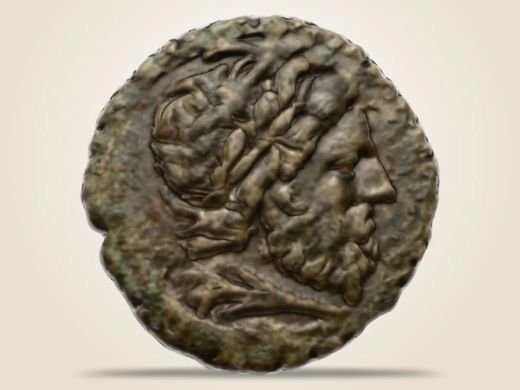
Coin of King Ballaios — Pharos type
Novac kralja Balajosa — farski tip
Drag to rotate · pinch to zoom
loads {mb} MBDescription
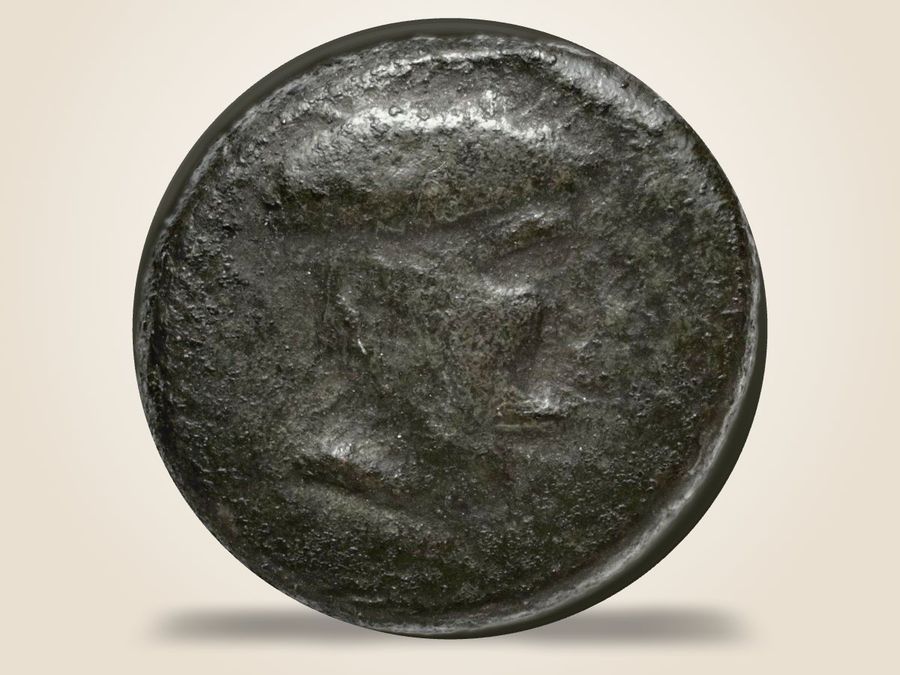
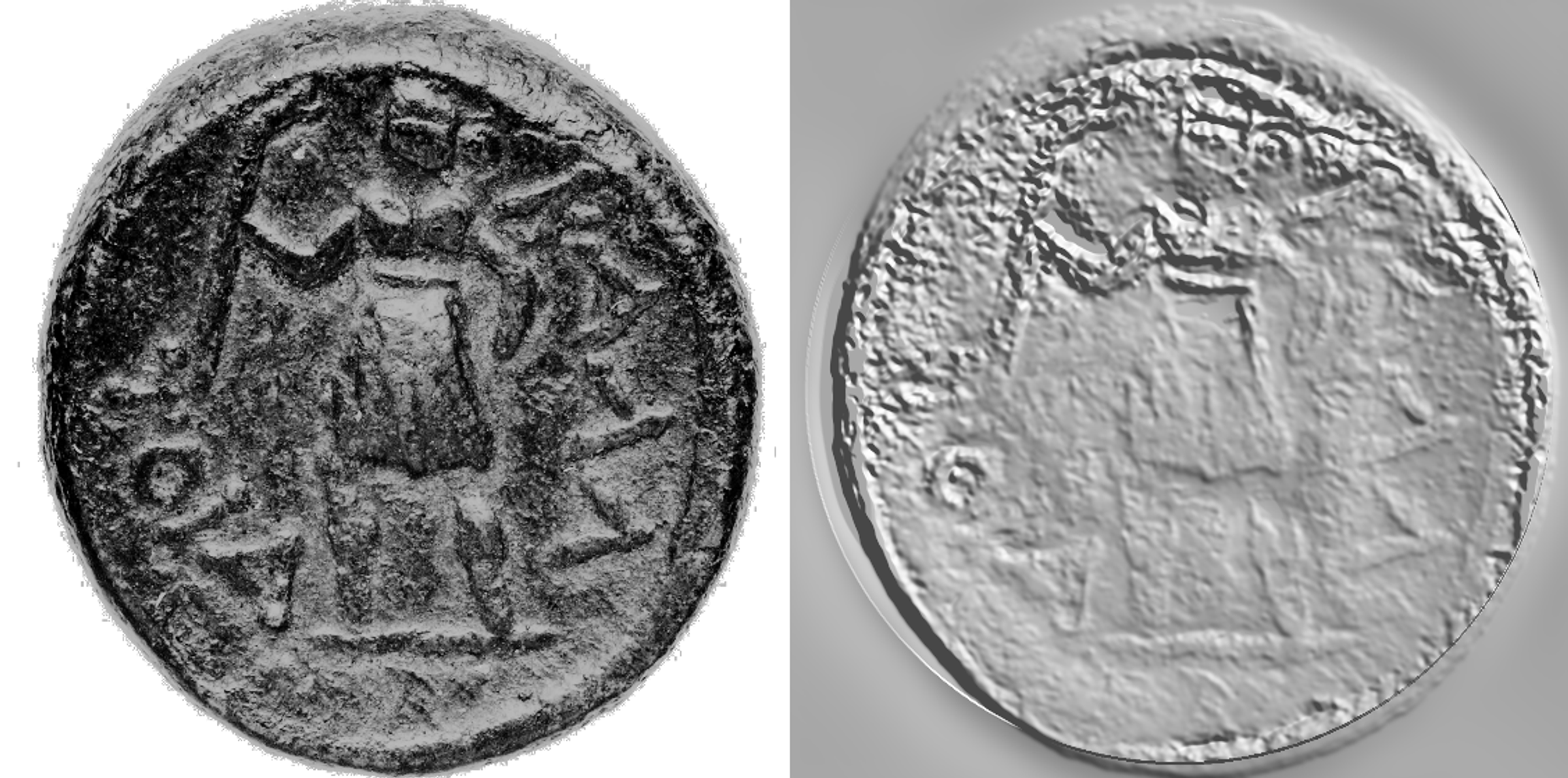
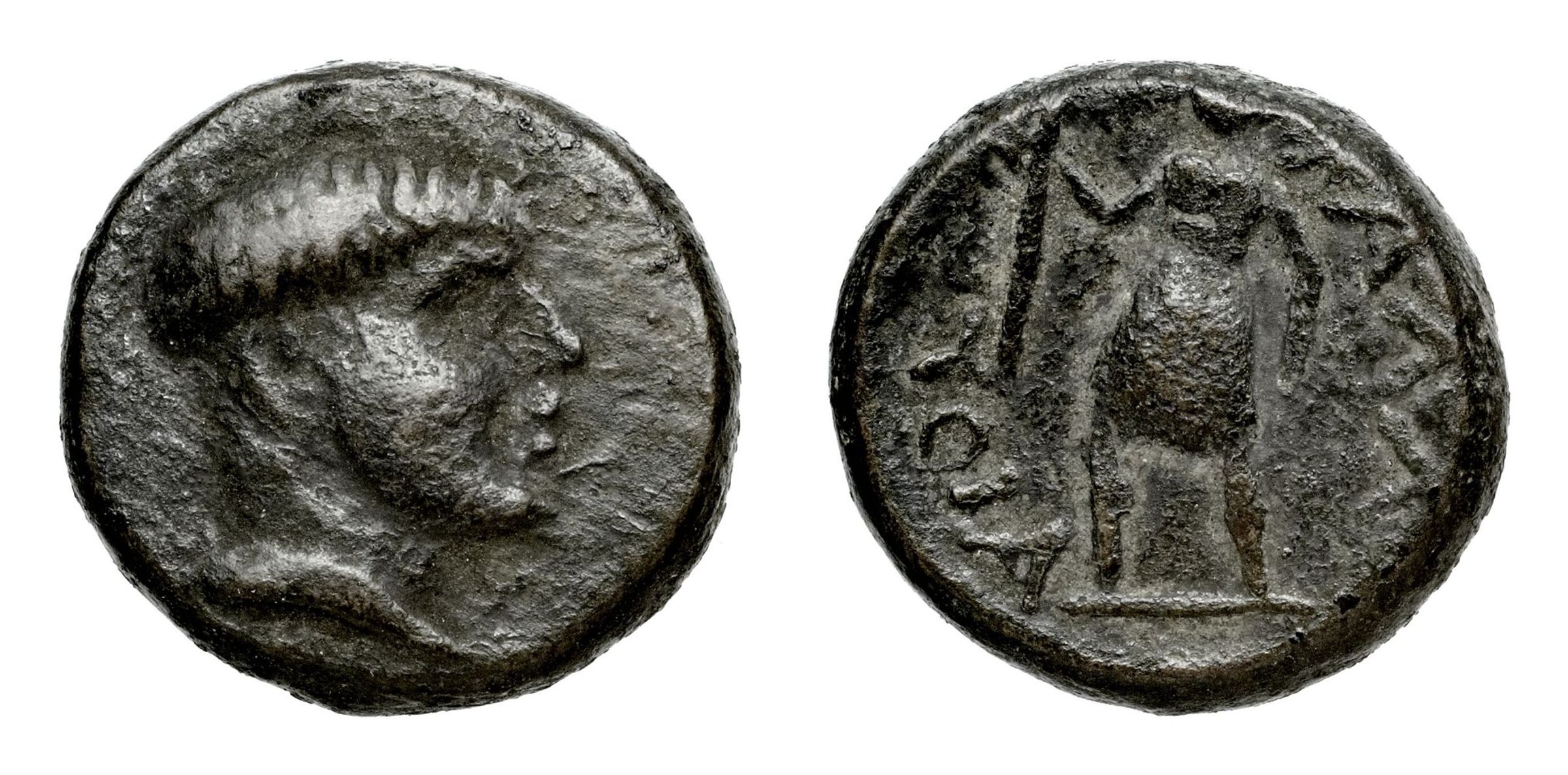
A bronze coin of **King Ballaios** from the Cabinet des médailles of the Bibliothèque nationale de France (Fonds général 283, 3.09 g). The library records this specimen too as struck at Pharos, **on the island of Hvar**, with a question mark, and dates it 167–135 BC. [1] On the reverse Artemis stands facing, holding a long object which the Lexicon of the Archaeology of Montenegro describes, for this type, as a **torch**; letters of the legend are visible beside the figure. [2]
The Lexicon of the Archaeology of Montenegro distinguishes two types of Ballaios' coinage. **The Pharos type**, found most often around the Greek colony of Pharos on Hvar, shows a calm, standing Artemis with a torch and is known only in bronze; **the Rhizon type**, far more numerous and most common at Risan, shows Artemis moving quickly, with a torch and two spears, and was struck in both silver and bronze. The date 167–135 BC given by the library goes back to Arthur Evans (1880); according to the Lexicon, the most recent views place Ballaios' coinage in the second half of the 3rd century BC, and pottery and radiocarbon results from Risan in its middle. [2]
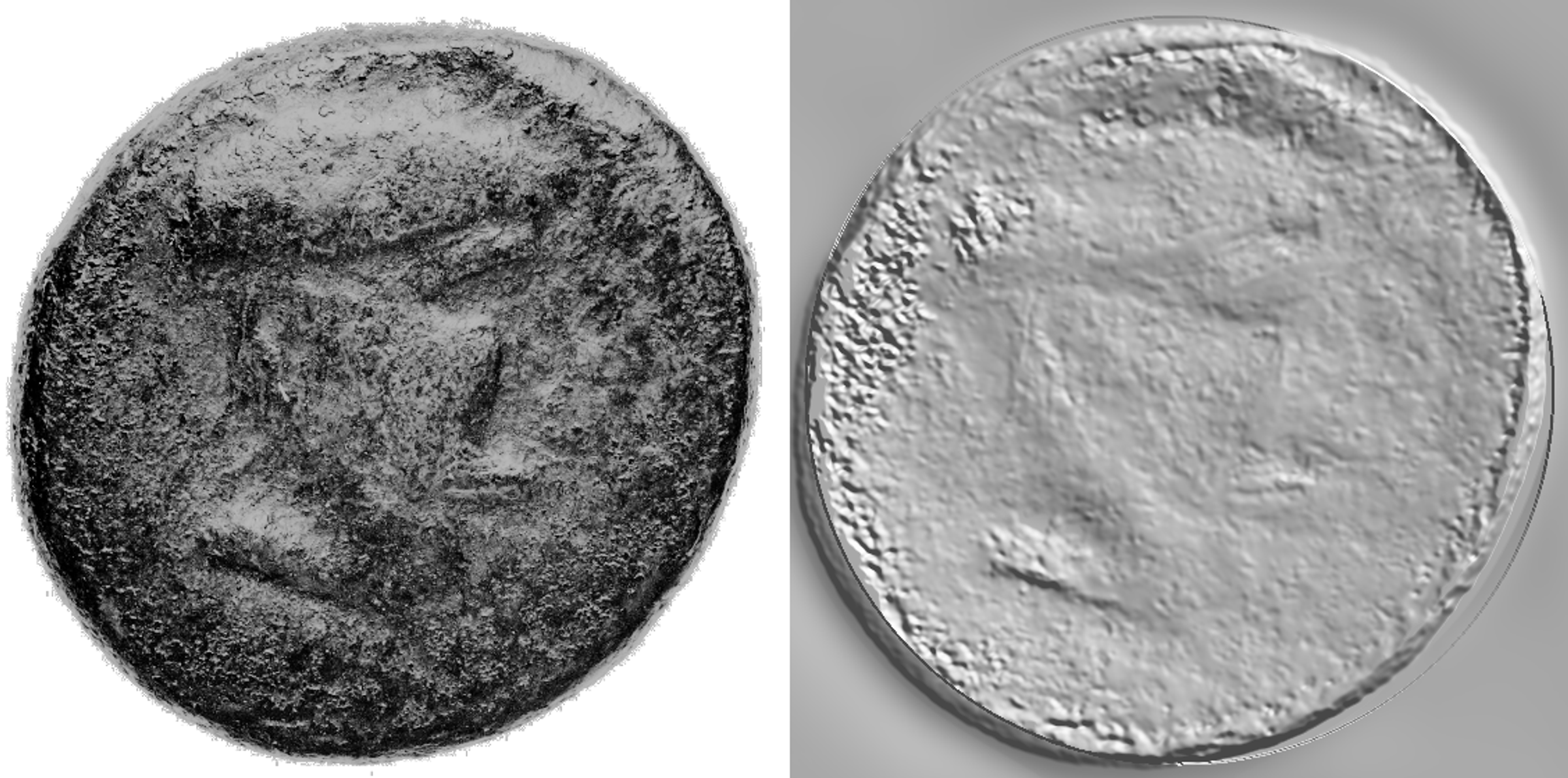
The obverse of this specimen is worn, so the king’s portrait survives on the model only in outline; **the reverse is legible**.
The 3D model was made from two photographs of the specimen (obverse and reverse) in the collection of the Bibliothèque nationale de France. The relief height was derived from the shading in the photograph, so the model is a faithful 3D drawing, not a measured survey of the coin. The photograph is applied to the model as its colour. For 3D printing, obverse and reverse were prepared as separate flat-backed plaques, enlarged 3:1, at true and at emphasised relief height.
The photographs of originals in the gallery come from public collections, under the licence each collection states; source and link are in the notes. [3] [4]
Plates from the documentation
Literature and sources
- Fotografije: Bibliothèque nationale de France, Département des Monnaies, médailles et antiques — https://gallica.bnf.fr/ark:/12148/btv1b8572968j (javno vlasništvo).
- J. Wilkes, The Illyrians, Oxford 1992.
- Fotografija originala: Bibliothèque nationale de France, Monnaies, médailles et antiques, Fonds général 284 — https://commons.wikimedia.org/wiki/File:Monnaie_-_Bronze,_Incertain,_Illyrie,_Ballaios_-_btv1b8572970m_(1_of_2).jpg (javno vlasništvo).
- CANU, Leksikon arheologije Crne Gore, odrednica „Balajos“ (Č. Marković) — https://leks.canu.ac.me/web/arhcg.php?OID=6632
From the same collection
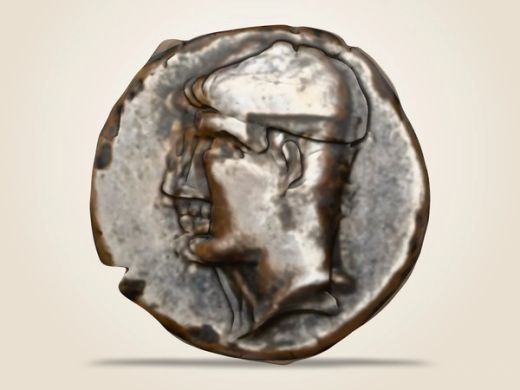
Coin of King Ballaios — Artemis with a torch
3rd century BC (c. 260/250–230) or 2nd century BC (after 168); dating disputed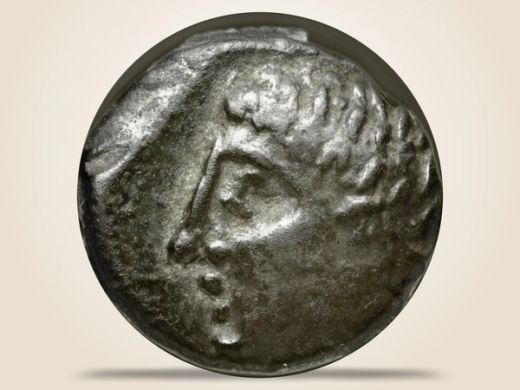
Coin of King Ballaios — Rhizon type (Risan mint)
2nd century BC, 167–135 per BnF; mid-3rd century BC per the Lexicon of the Archaeology of Montenegro (dating disputed)