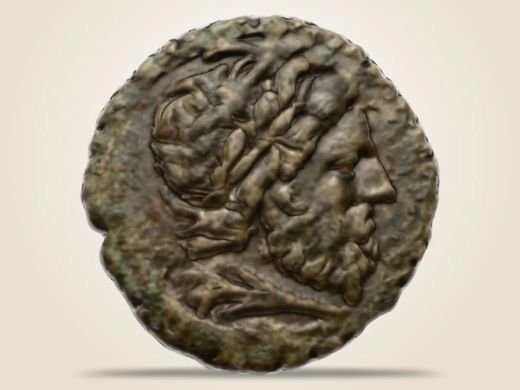
Coin of King Ballaios — Artemis with a torch
Novac kralja Balajosa — Artemida sa bakljom
Drag to rotate · pinch to zoom
loads {mb} MBDescription
A bronze coin of the Illyrian king Ballaios, attributed to the mint of ancient Rhizon, **today Risan in the Bay of Kotor**. The obverse shows the king’s head facing left; on the reverse Artemis walks left with a torch in her right hand and two spears in her left, with the legend ΒΑΣΙΛΕΩΣ ΒΑΛΛΑΙΟΥ — **“of King Ballaios”**. [1] Many specimens were found at the site of Carine in the lower part of the ancient town. The **Great Hoard of King Ballaios** was also excavated there in 2010: 4,565 bronze coins, about 12 kg, hidden in a ceramic pot under the floor of a house; all but one are of this type. The hoard is kept at the Centre for Conservation and Archaeology of Montenegro. [2] One room there was considered as a possible mint, but the 2011 excavations did not reliably confirm that use.
**The date is disputed.** A recent proposal based on excavations in Risan places Ballaios’ reign and coinage c. 260/250–230 BC; the British Museum keeps the earlier accepted date after 168 BC. The Lexicon of the Archaeology of Montenegro states that pottery and radiocarbon results from Risan place Ballaios' reign in the middle of the 3rd century BC, and the burial of the Great Hoard roughly at the end of that century. [1] [2] The Artemis on the reverse is **the same goddess to whom the Ulcinj altar** in this collection is dedicated.
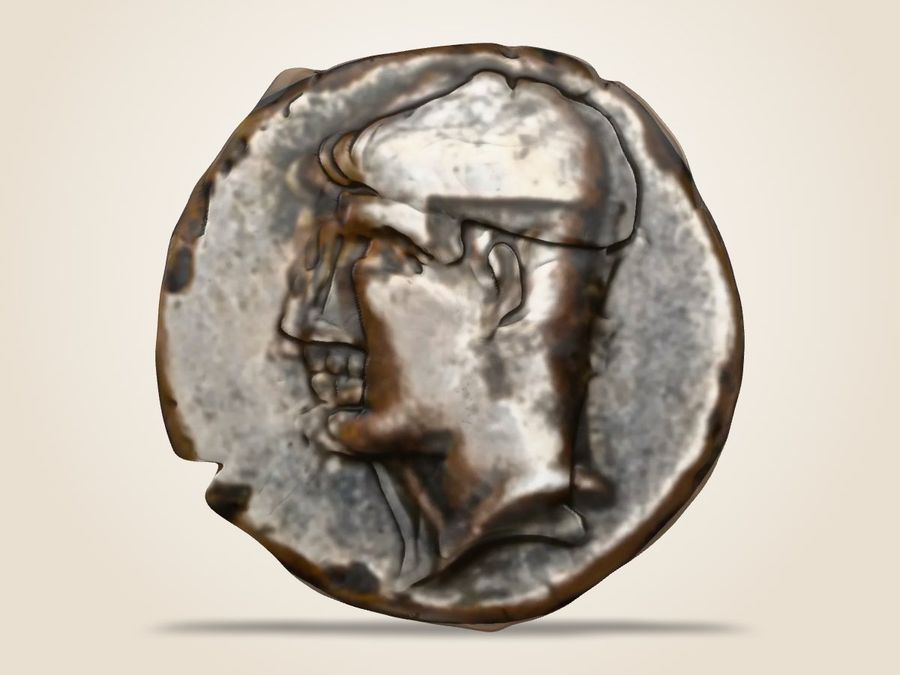
The 3D model was made after photographs of a specimen of this type: obverse and reverse were modelled separately, in full relief, and joined into a two-sided coin at true size (diameter from the catalogue, thickness derived from the weight). The model is a faithful three-dimensional rendering of the type, not a measured survey of the specimen; the relief height is emphasised for legibility. For 3D printing, obverse and reverse were prepared as separate models.
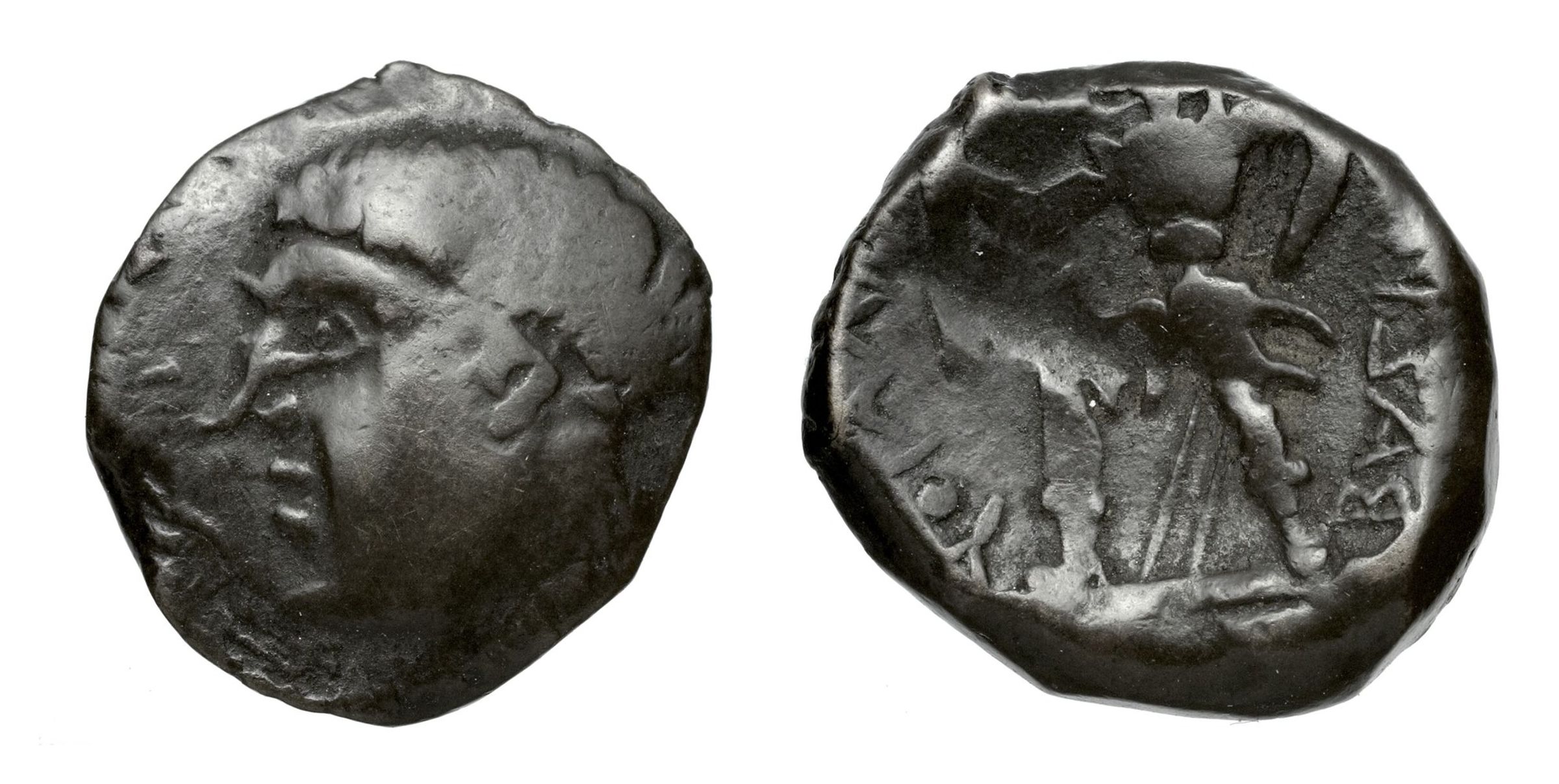
The photographs of originals in the gallery come from public collections, under the licence each collection states; source and link are in the notes. [3]
Plates from the documentation
Literature and sources
- Britanski muzej, primjerak 1889,1106.34 — https://www.britishmuseum.org/collection/object/C_1889-1106-34
- T. Kowal, istraživanja u Risnu 2009–2010, str. 200 — https://archeo.uw.edu.pl/zalaczniki/upload1194.pdf
- T. Kowal, istraživanja 2011, Światowit IX (L) A, str. 201 — https://archeologia.uw.edu.pl/swarch/Swiatowit_IX(L)A2011_s201-207.pdf
- P. Domines Peter, studija o grčko-ilirskom novcu (2024), str. 157 — https://www.iarh.hr/media/publikacije/ZIA21web.pdf
- Fotografija originala: Bibliothèque nationale de France, Monnaies, médailles et antiques, Fonds général 282 — https://commons.wikimedia.org/wiki/File:Monnaie_-_Bronze,_Incertain,_Illyrie,_Ballaios_-_btv1b85729674_(1_of_2).jpg (javno vlasništvo).
- CANU, Leksikon arheologije Crne Gore, odrednica „Balajos“ (Č. Marković) — https://leks.canu.ac.me/web/arhcg.php?OID=6632
- CANU, Leksikon arheologije Crne Gore, odrednica „Velika ostava novca kralja Balajosa“ (V. Kovačević, P. Diček) — https://leks.canu.ac.me/web/arhcg.php?OID=6922
From the same collection
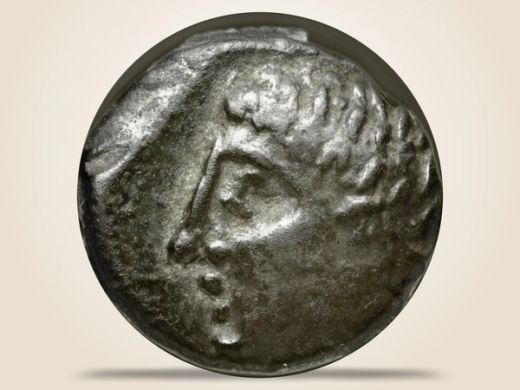
Coin of King Ballaios — Rhizon type (Risan mint)
2nd century BC, 167–135 per BnF; mid-3rd century BC per the Lexicon of the Archaeology of Montenegro (dating disputed)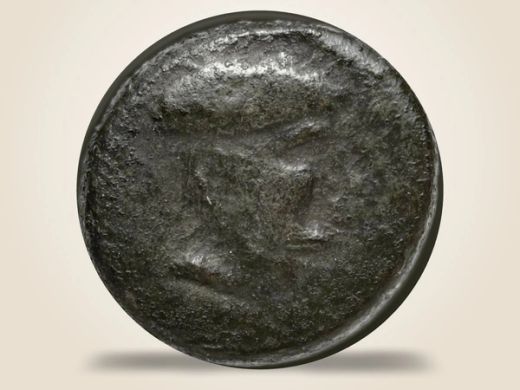
Coin of King Ballaios — Pharos type
2nd century BC, 167–135 per BnF; in a recent proposal 3rd century BC, c. 260/250–230 (dating disputed)