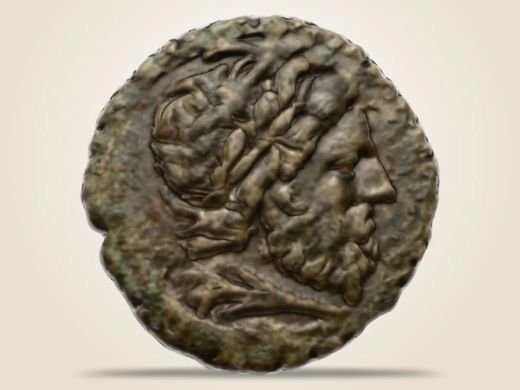
Coin of King Ballaios — Rhizon type (Risan mint)
Novac kralja Balajosa — rizonski tip (kovnica u Risnu)
Drag to rotate · pinch to zoom
loads {mb} MBDescription
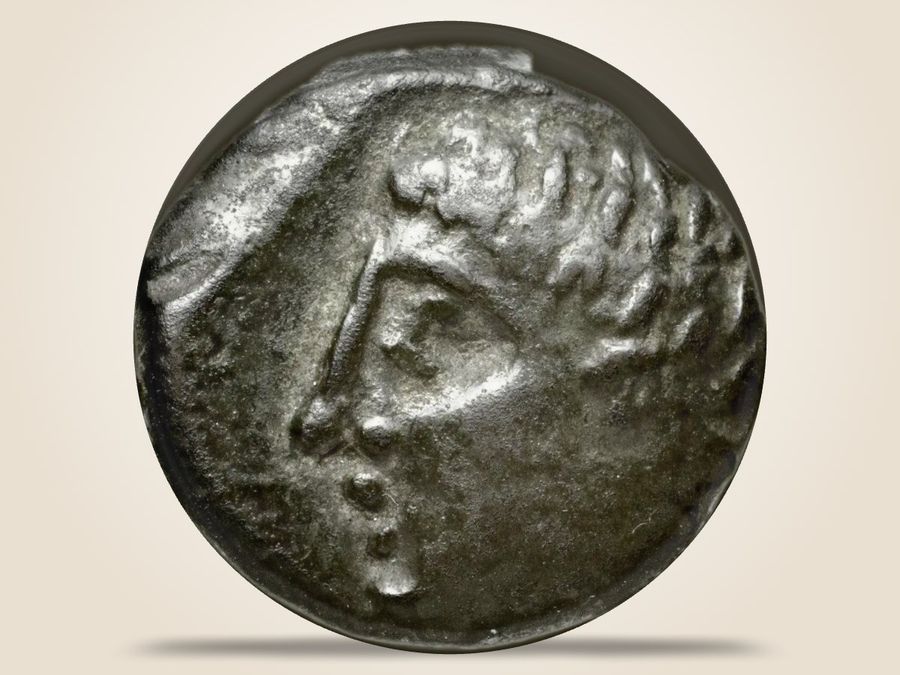
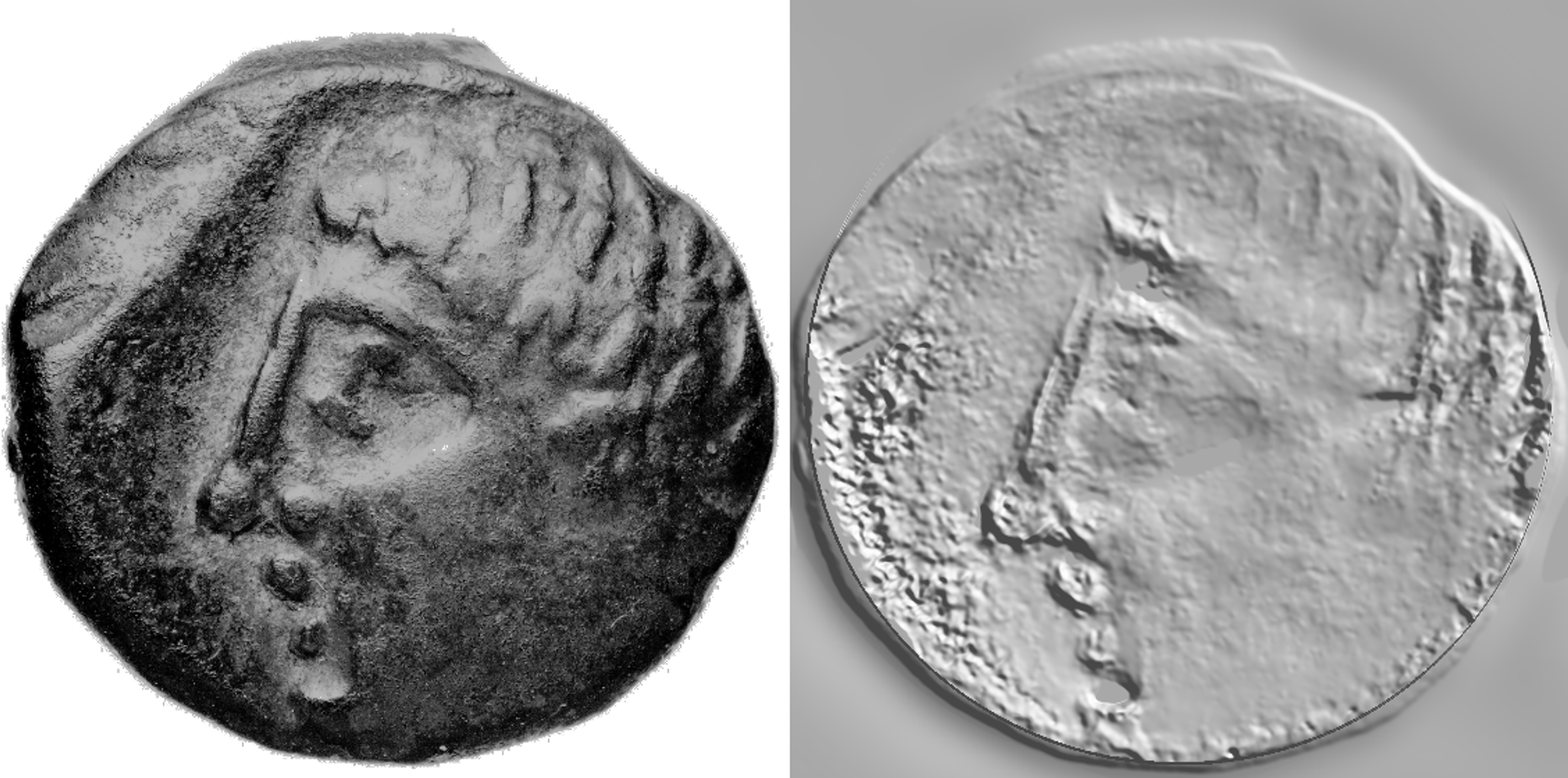
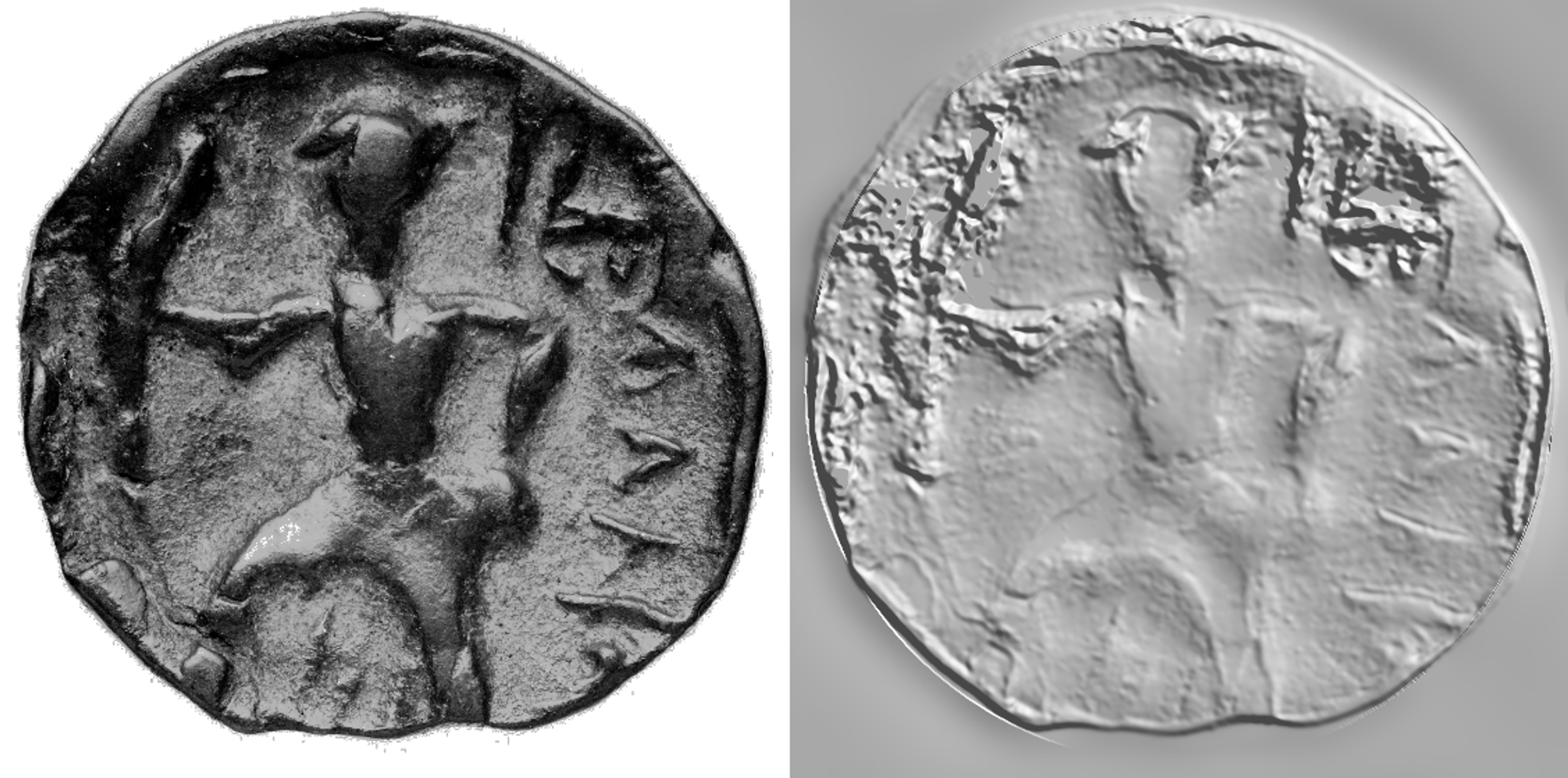
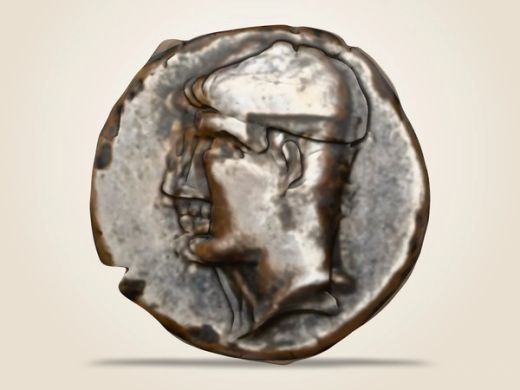
A bronze coin of **King Ballaios** of the Rhizon type, from the Cabinet des médailles of the Bibliothèque nationale de France (Fonds général 290, 3.27 g). The library attributes it, with a question mark, to the mint of Rhizon, **today Risan in the Bay of Kotor**, and dates it to 167–135 BC. [1] The obverse shows a male head facing left, according to the library probably the king’s portrait. On the reverse Artemis strides to the left, in motion, with a torch in her right hand; along the right edge the letters ΒΑΛΛΑΙ[ΟΥ] — “of Ballaios” — can be read. [1]
The Lexicon of the Archaeology of Montenegro distinguishes two types of Ballaios’ coinage: the **Pharos type**, with a calm, standing Artemis, and the **Rhizon type**, with Artemis moving quickly, holding a torch and two spears, struck in silver and in bronze. According to the Lexicon, pottery and radiocarbon results from Risan place Ballaios’ reign in the middle of the 3rd century BC. [2] The Rhizon type is by far the more numerous: of the 4,565 bronze coins of the **Great Hoard of King Ballaios**, found in Risan in 2010, all but one belong to it. [3]
In the collection it stands beside another specimen of the Rhizon type and two Pharos specimens from the same library: the same ruler, two reverse types, and each piece with its own die impression.
The 3D model was made from two photographs of the specimen (obverse and reverse) in the collection of the Bibliothèque nationale de France. The relief height was derived from the shading in the photograph, so the model is a faithful 3D drawing, not a measured survey of the coin. The photograph is applied to the model as its colour. The diameter of 17 mm is the catalogue value for this type and the thickness is derived from the mass; the rim of the model is a regular circle, while the flan of the original is irregular. For 3D printing, obverse and reverse were prepared as separate flat-backed plaques, enlarged 3:1, at true and at emphasised relief height.
The photographs of originals in the gallery come from public collections, under the licence each collection states; source and link are in the notes. [4]
Plates from the documentation
Literature and sources
- Fotografije: Bibliothèque nationale de France, Département des Monnaies, médailles et antiques, Fonds général 290 — https://gallica.bnf.fr/ark:/12148/btv1b85729763 (javno vlasništvo).
- Bibliothèque nationale de France, zapis cb41820343h — https://catalogue.bnf.fr/ark:/12148/cb41820343h
- IRIS, Rhizon, Ballaeus, BMC Thessaly 7–10 — https://greekcoinage.org/iris/id/rhizon.ballaeus.bmc_thessaly.7-10
- CANU, Leksikon arheologije Crne Gore, odrednica „Balajos“ (Č. Marković) — https://leks.canu.ac.me/web/arhcg.php?OID=6632
- CANU, Leksikon arheologije Crne Gore, odrednica „Velika ostava novca kralja Balajosa“ (V. Kovačević, P. Diček) — https://leks.canu.ac.me/web/arhcg.php?OID=6922
From the same collection
Coin of King Ballaios — Artemis with a torch
3rd century BC (c. 260/250–230) or 2nd century BC (after 168); dating disputed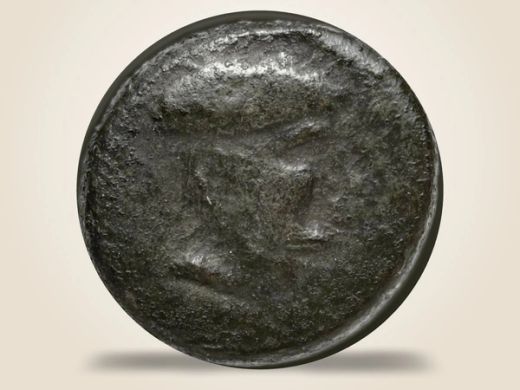
Coin of King Ballaios — Pharos type
2nd century BC, 167–135 per BnF; in a recent proposal 3rd century BC, c. 260/250–230 (dating disputed)